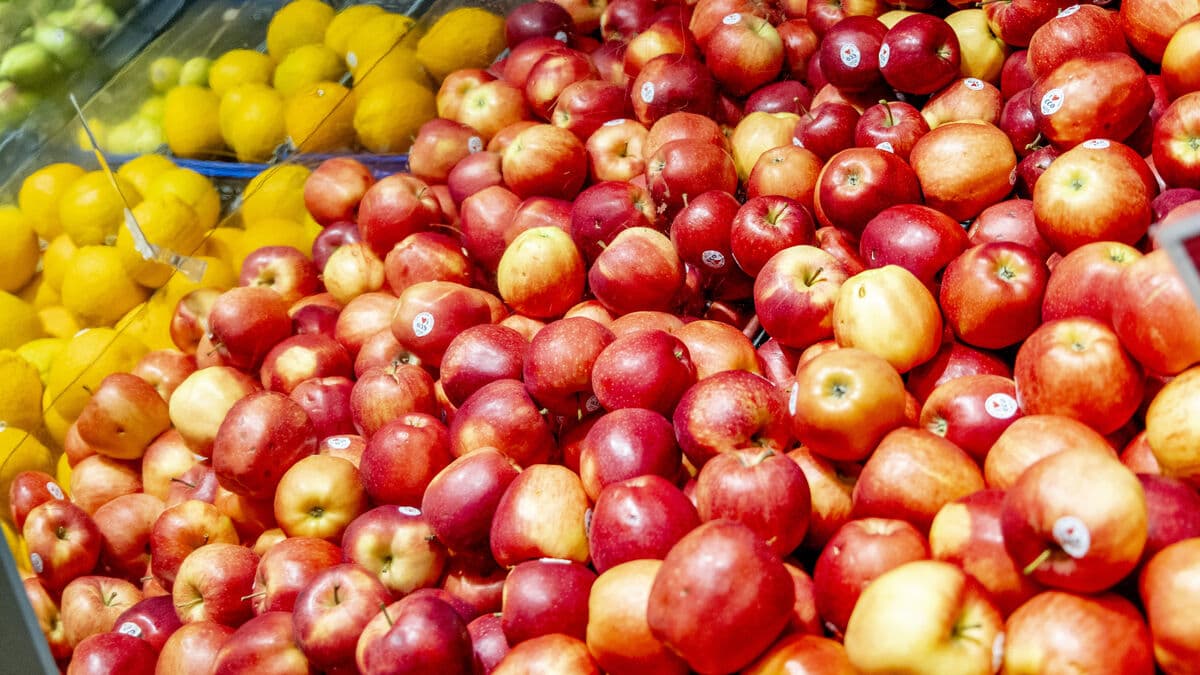
The Swedish Society for Nature Conservation has investigated the presence of pesticides in, among other things, apples, grapes, wheat flour, rapeseed oil and tomatoes.
The difference between conventionally and organically grown food is significant. 37 of the 50 foods tested contained traces of pesticides - including substances that may be harmful to bees and suspected carcinogens.
Almost no pesticides were found among the organic foods.
Health hazard
The Swedish National Food Agency continuously sets limit values for individual chemicals. The system indicates how much a food can contain before it becomes harmful to health.
However, Christina Rudén, professor of regulatory toxicology and ecotoxicology at Stockholm University, believes that the Swedish National Food Agency's tests are insufficient and that the total chemical exposure is often underestimated.
"You don't take into account all the chemicals we're exposed to outside of food. It's like looking at a small piece of cake and forgetting about the rest of the cake," she says.
Together, the chemicals form a “cocktail of substances” that can be dangerous to health in the long run.
Switching to organic is a way to reduce your exposure to pesticides, says Christina Rudén.
Lack of support
But the issue of pesticides is complex. Elin Engdahl, an environmental toxins expert at the Swedish Society for Nature Conservation, explains that today's agriculture is dependent on chemicals for larger and more efficient harvests.
At the same time, the study interviewed several farmers who want to make the switch to organic farming, something that, according to the Swedish Society for Nature Conservation, is made more difficult by financial constraints.
The Swedish Society for Nature Conservation believes that it is absolutely necessary to invest in organic farming in order to phase out chemical pesticides.
Political instruments are needed and industry needs to take responsibility. Consumers also need to accept goods that are not always perfect in appearance, says Elin Engdahl.