US government sources said late Sunday that a group of countries to support efforts in the strait could be announced next week, the Wall Street Journal reported. It was not clear which countries would be involved.
So far, invited countries have shown great hesitation.
"Will we soon be an active part of this conflict? No," German Foreign Minister Johann Wadephul told German media company ARD on Sunday.
Trump stated in a post on Truth Social on Saturday that countries whose oil trade is affected by Iran's actions in the Strait of Hormuz should send warships, together with the United States, to keep the strait "open and safe."
“Negotiated solution”
The president listed China, France, Japan, South Korea and the United Kingdom as examples of countries that will “hopefully” contribute.
So far, reactions have been few and lukewarm.
Wadephul added that the Strait of Hormuz will only be secured through “a negotiated solution.” He is skeptical about, for example, expanding the EU’s naval operation in the Red Sea to Hormuz and does not foresee “Germany participating.”
Takayuki Kobayashi, political director of Japan's ruling party, said the bar for sending warships to the Strait of Hormuz has been set "extremely high."
"We are not ruling out the possibility legally," he told Japanese public broadcaster NHK, adding that the issue must be treated with great caution.
Similar voices are being heard from the UK.
"The plan now must be to calm the conflict," the country's Energy Security Minister Ed Miliband told the BBC.
Norway announced through a spokesperson at the Ministry of Defense that "there are no plans to send Norwegian ships," NTB reported.
Will consider
In South Korea, an official at the presidential office told AFP that the country is "following President Trump's statements on social media closely" and "will carefully consider the matter."
Iranian Foreign Minister Abbas Araghchi urged other countries not to do anything that risks escalating the war.
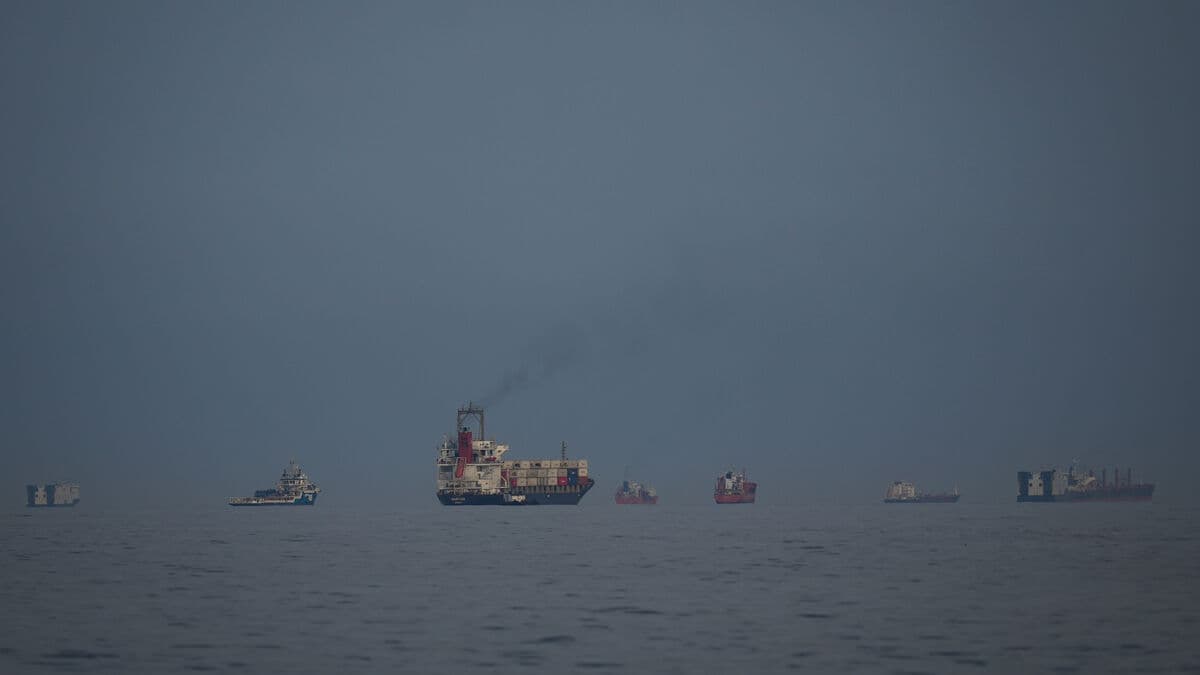
Since the outbreak of war just over two weeks ago, Iran has attacked and threatened shipping traffic in the Strait of Hormuz - through which approximately a fifth of the world's oil production passes.