A complicated political landscape emerged in Denmark as almost all votes were counted in Tuesday's parliamentary elections.
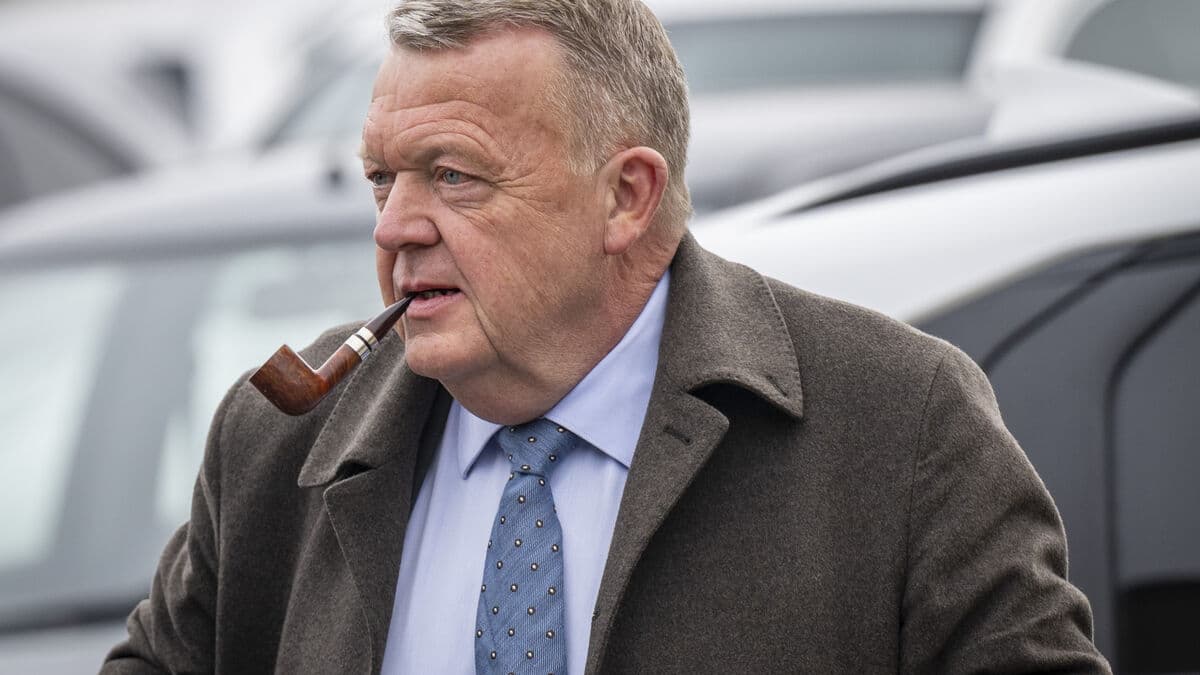
The governing parties Social Democracy and Venstre have fallen significantly, and Lars Løkke Rasmussen's Moderates are also losing ground. But Lars Løkke Rasmussen is still likely to be decisive in the upcoming government formation.
In addition, all parties in the Folketing appear to have cleared the two percent threshold and can remain in parliament.
The right-wing Liberal Alliance party has made significant progress and party leader Alex Vanopslagh has the wind in his sails.
At 11 p.m., it looked like the ruling Social Democrats were getting around 22 percent of the vote, a drop of nearly 6 percentage points. The party is still the largest, but the result is historically poor, Danish media reports.
There is no doubt that it costs to be responsible through so many crises, says Minister for the Environment and Gender Equality Magnus Heunicke (S) to TT at the Social Democrats' election vigil in Copenhagen.
When almost all votes were counted, the red bloc had 84 seats and the blue bloc 77 seats, according to Danmarks Radio. The Moderates had 14 seats.
90 seats are required for a majority in the Folketing.
The Left is furious
One reason is that the governing Liberal party also appears to have fallen sharply, from 13.3 to just over 10 percent. According to the first exit polls, the party would have fallen even further.
Neither the red nor the blue bloc will have their own majority in the Folketing, which has 179 members, without the Moderates.
Everything therefore points to Løkke being the kingmaker who will decide whether Denmark's next government will lean to the right or left.
Alex Vanopslagh was celebrated as a victor when he met supporters and the media, after the party made significant progress in the election.
What can I offer Lars Løkke? That he can be free from Mette Frederiksen.
Ambassador followed
The votes in the Faroe Islands and Greenland, with two mandates each, may also have some role in the negotiations to form a new government.
US Ambassador Kenneth Howery followed the election in person, and told TT, "I'm here just to observe the democratic process."
The Danish People's Party, which was almost completely eliminated in the last election, has surged from 8 to 16 seats late in the evening, and party leader Morten Messerschmidt arrived to cheers at the election vigil in Copenhagen, TT's correspondent reports.
"We seem to be the party that is growing the most. We will show the Danes that there is another alternative to Løkke and Mette," he said.
Political analyst Søs Marie Seerup on Danish TV2 says that Messerschmidt and the Danish People's Party must move towards the political center in order to be part of a new government.
She believes that Løkke Rasmussen will pressure Messerschmidt into such a shift.
He has previously been very adamant about not collaborating with Lars Løkke.